Extended bass scales
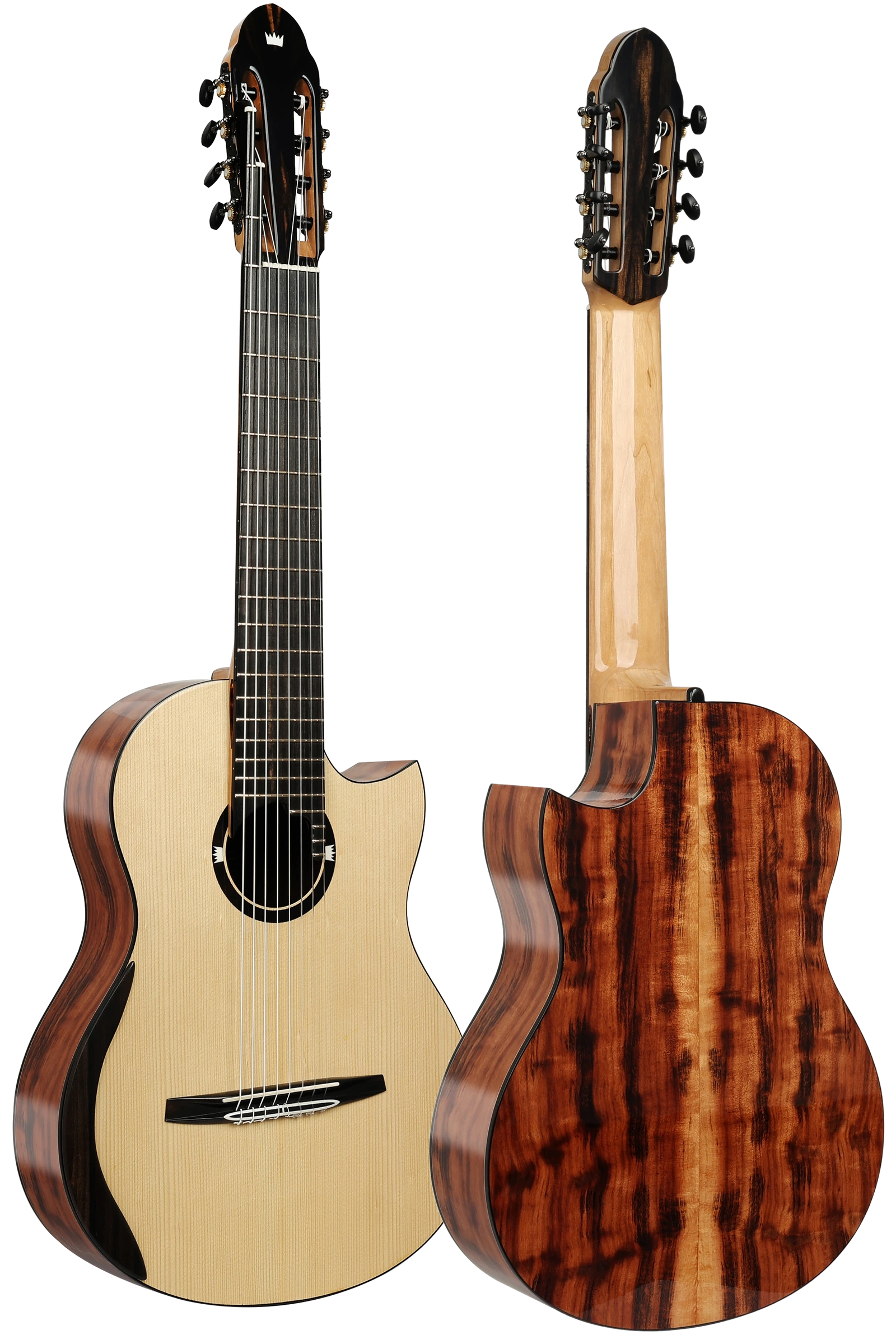
No. 670 documents 650, 729.6 and 773 mm speaking lengths. The longer bass strings are part of that specific design.
Nylon / Instrument family
Two additional strings, with their range and reach deliberately designed.
The playing brief
Equal-scale, extended-bass and fan-fret directions can be discussed. The purpose of the two extra strings, your tuning and your left-hand reach determine the starting point.
No. 670 documents 650, 729.6 and 773 mm speaking lengths. The longer bass strings are part of that specific design.
No. 495 uses 650 mm for all eight strings. No. 672 is a historical Opus Prime instrument, retained as an archive reference rather than a current series offer.
String spacing must work at both nut and bridge. We discuss the positions of the additional strings rather than assuming a single eight-string width.
Completed instruments
These photographs, measurements and films belong to the numbered guitars. They are reference instruments, not a fixed specification or a statement of current availability.
No. 670 /
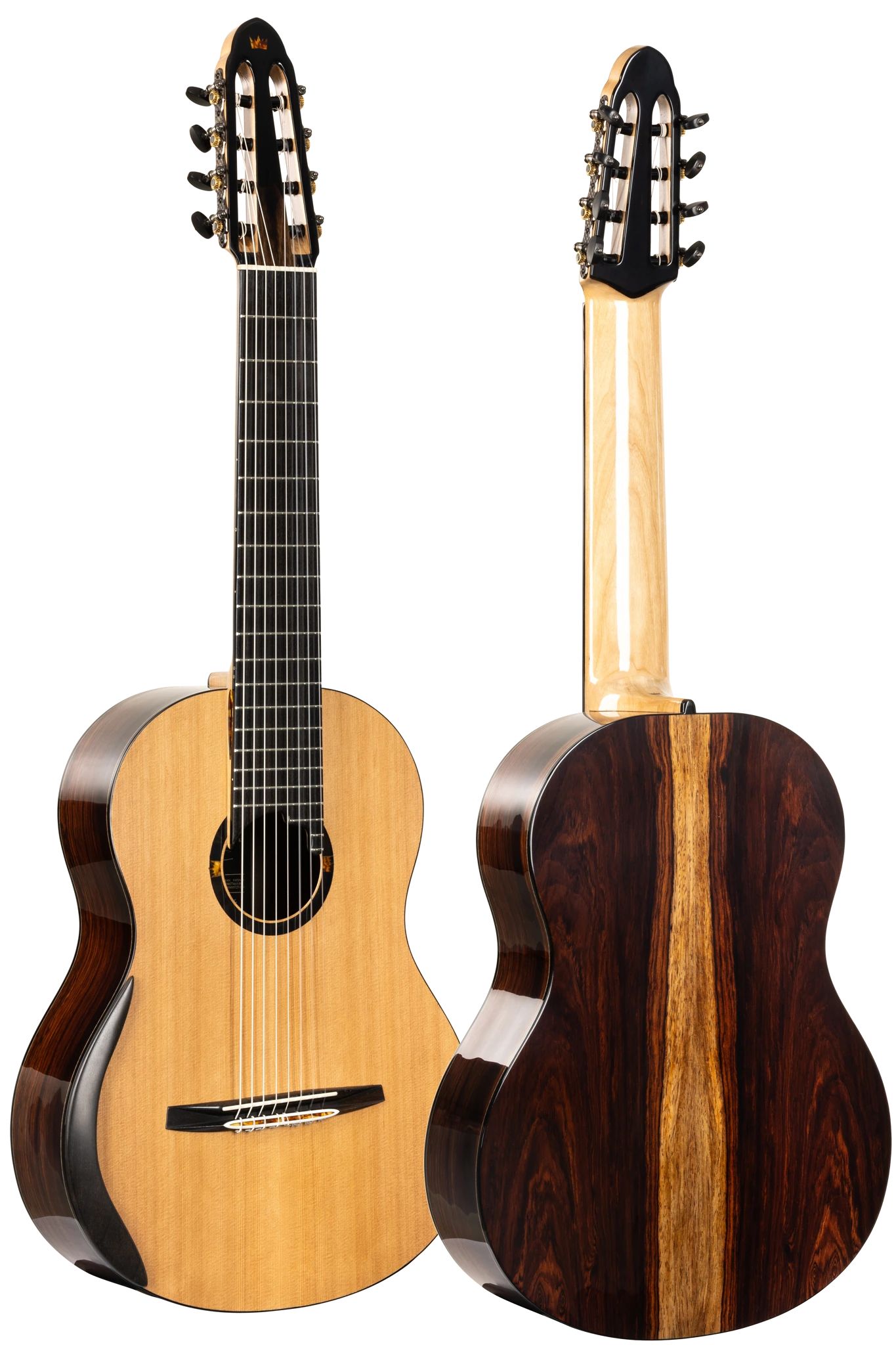
No. 672 / Opus Prime
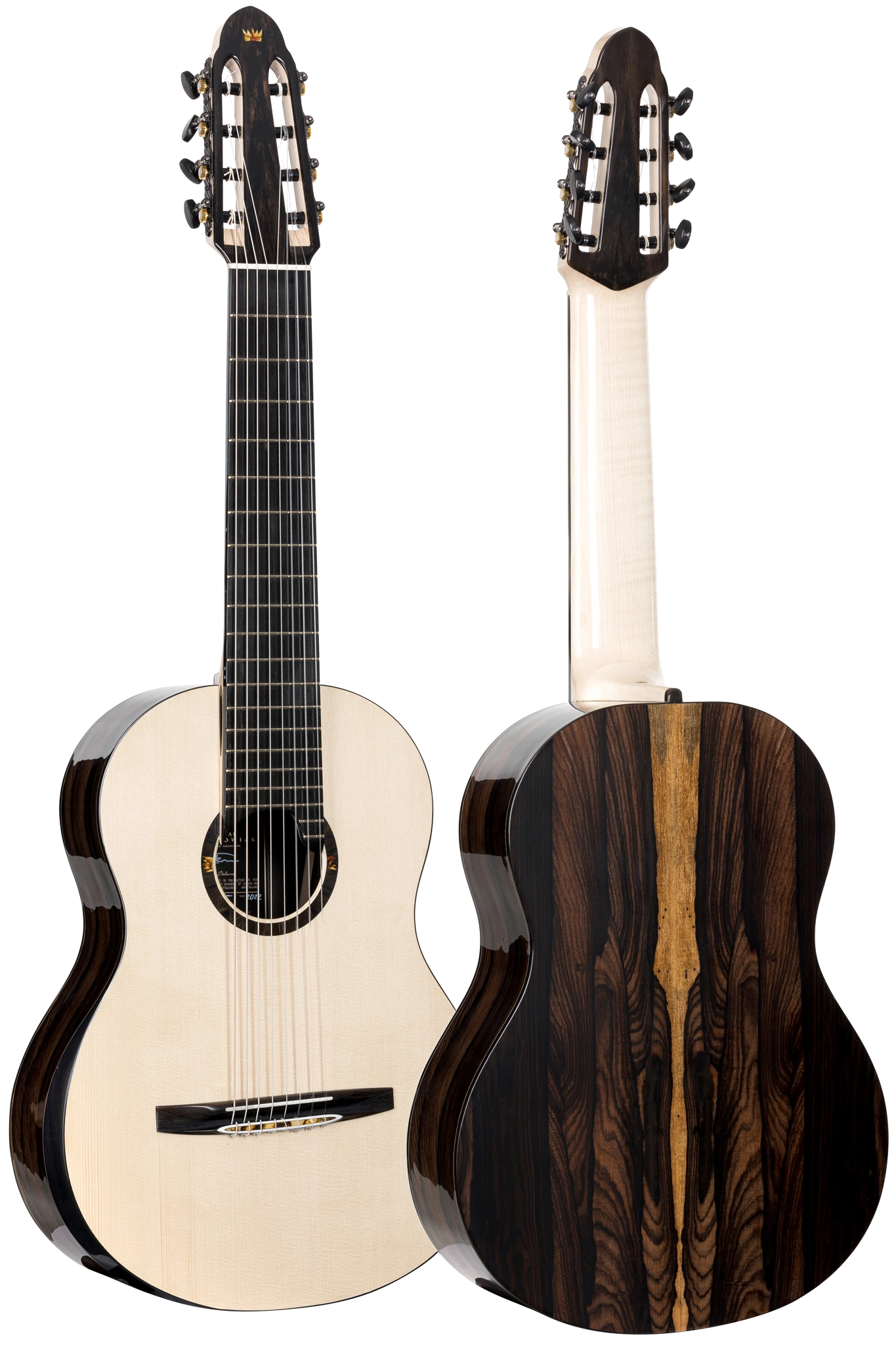
No. 495 /
Before you choose
That depends on the intended tuning and the register you want to add. A string count alone does not establish the pitch, tension or response. We review those choices together.
No. Fan frets describe different scale lengths across the strings. ArcFret describes curved fret geometry developed for intonation. Compatibility with a new multi-string design requires individual assessment.
Made for your playing
Tell us what you play, what feels right on your current instrument and what you would change. The specification, price and anticipated timing are agreed before the build begins.
Discuss an instrument